Extraversion: The Big Five Trait, Explained Clearly
Extraversion isn't about being loud or charming. It's about where your energy comes from. Here's what the trait measures, its facets, and what it predicts.
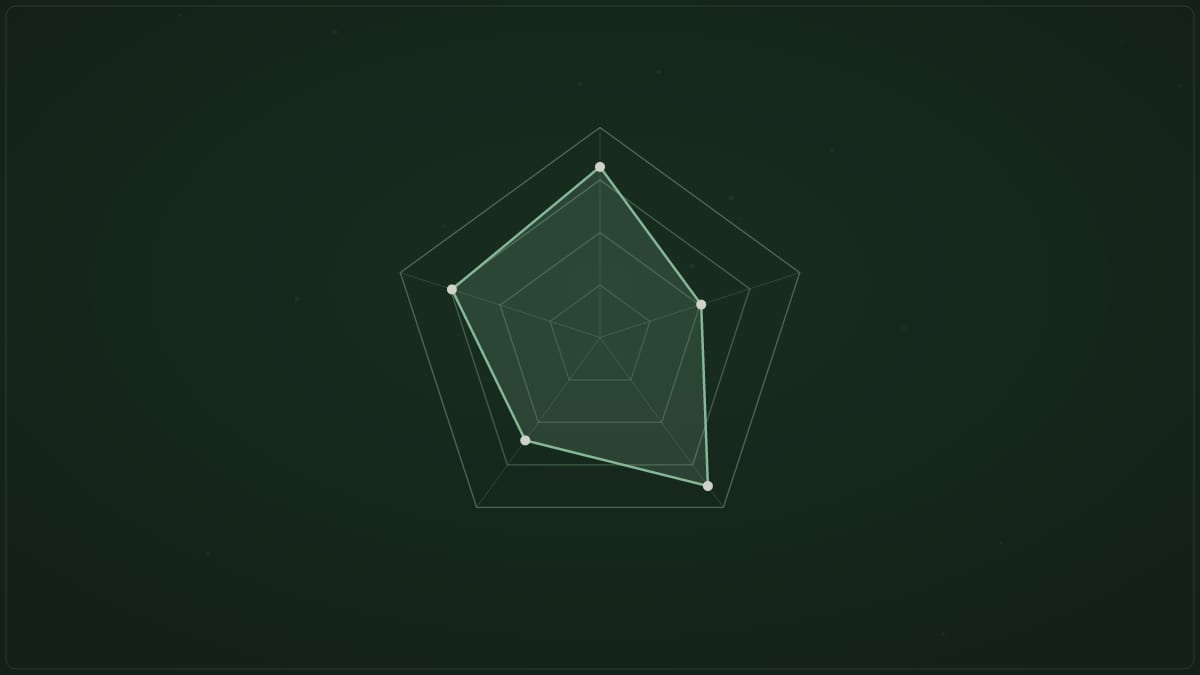
Extraversion isn't charm. It's not confidence. It's not whether you're good at parties. Extraversion is about where your energy comes from - whether you're energized by external stimulation and social contact, or whether solitude restores you. Most popular writing on extraversion misses this distinction entirely, conflating it with likability, social skill, or even confidence. The real trait is quieter and far more interesting.
H2: What extraversion means
Extraversion is the tendency to seek out and be energized by external stimulation, especially social engagement. It's the "E" in the full Big Five model of personality.
Think of it as an energy direction. Extraverts recharge through external engagement - conversation, activity, novelty, social connection. Introverts recharge through solitude and internal focus - reflection, quiet, depth. Neither is better. Both are normal distributions on the same spectrum, not opposite traits.
The key is the recharge mechanism, not the skill. An introvert can be socially competent, funny, and enjoyed by others. But they'll need downtime to recover. An extravert can struggle with social skills or prefer small groups, but they'll still feel energized by external engagement. That fundamental difference in how they fuel themselves is what extraversion measures.
H2: What extraversion is not
Introversion and shyness are not the same thing. This matters enough to say twice.
Shyness is social anxiety - a fear or apprehension about judgment in social settings. It's a state, and it's learnable. You can feel shy in a boardroom presentation but completely at ease one-on-one. Introversion is a dispositional preference for lower external stimulation. You can be a shy extravert - someone who loves people, wants connection, and feels energized by groups, but is terrified of judgment or evaluation. You can also be a confident introvert - someone who speaks clearly in meetings, leads teams well, but still needs downtime to feel okay.
Extraversion is also not confidence. Confident introverts are everywhere - they know what they want, speak clearly, feel secure in their abilities, but still prefer smaller circles and need recovery time. Socially anxious extraverts exist too - they crave connection and feel drained by solitude, but they struggle with self-doubt in social situations.
Charisma and extraversion are different. Charisma is partly learned social skill and partly personality. Some extraverts are charismatic performers. Others are quiet extraverts who are gregarious and warm but not flashy. Social skills are built through practice. Extraversion is your baseline preference for external engagement.
Being fun at parties is not synonymous with extraversion. Some high-extraversion people love parties. Others score high on extraversion but low on the gregariousness facet - they're energized by one-on-one depth or intellectual sparring rather than large group events. The trait describes how you refuel, not what social setting you prefer.
These distinctions matter because they separate real personality differences from behavior and skill.
H2: High extraversion vs low extraversion
H3: High extraversion
High-extraversion people are energized by external stimulation - social contact, activity, novelty, variety. They tend to think out loud, enjoy large groups, seek stimulation, and feel flat or bored in solitude for extended periods. They build larger social networks and seek positions where they can lead, perform, or coordinate others.
High extraversion is not better. It's a different metabolism for social contact.
H3: Low extraversion (introversion)
Low-extraversion people (introverts) are energized by solitude, depth, inner reflection, and their own thoughts. They prefer smaller groups or one-on-one conversation. They need fewer but often deeper relationships. Extended social engagement, even enjoyable social engagement, depletes their energy.
Low extraversion is not shyness. It's not antisocial. It's just a different energy budget.
H3: Ambiversion
Most people score in the middle range of the extraversion spectrum. These ambiverts flex depending on context - they can be energized by social engagement but also genuinely enjoy solitude. They're comfortable in both, without a strong pull toward either extreme.
Ambiversion gets less attention in pop psychology, but research by Adam Grant (2013) showed something counterintuitive: ambiverts outperformed both high and low extraverts in sales roles. They had the flexibility to approach both socially engaged and more reserved prospects naturally, without code-switching. Learn more about ambiversion explained.
H2: The 6 facets of extraversion
Extraversion isn't monolithic. The NEO-PI-R model (Costa & McCrae) breaks it into six facets, and you can be high on some and low on others.
H3: Warmth
Warmth measures interpersonal closeness, affection, and friendliness. High-warmth people gravitate toward intimacy and express affection easily. They care about personal connection. Low-warmth people are more formal or reserved emotionally, though this doesn't mean they're cold - they may simply show care differently.
Many introverts score high on warmth but low on gregariousness. They invest deeply in close relationships but don't need or want large social circles.
H3: Gregariousness
Gregariousness is the preference for large groups and crowds. High-gregariousness people genuinely enjoy big events, lots of people, and group activities. Low-gregariousness people feel drained by crowds and prefer smaller gatherings or one-on-one time.
This facet is where some of the "introvert vs extravert" stereotypes live - but it's only one slice of extraversion.
H3: Assertiveness
Assertiveness measures dominance, leadership in social settings, and willingness to take charge. High-assertiveness people speak up, take initiative, and naturally step into leadership roles. Low-assertiveness people are more reserved, prefer to listen, and rarely initiate or dominate social interaction.
Assertiveness predicts who gets picked as a leader more than whether they lead well. Some of the best leaders score lower on assertiveness but higher on other traits like conscientiousness or emotional stability.
H3: Activity level
Activity level measures pace of life, energy output, and busyness. High-activity people move quickly, do many things, and feel restless when idle. Low-activity people prefer a slower pace, deliberate action, and downtime.
This facet is independent of introversion-extraversion. A high-extraversion person might score low on activity (enjoys people but moves slowly) or high (enjoys people and does lots of things). Same with introverts.
H3: Excitement-seeking
Excitement-seeking measures the craving for stimulation, thrills, variety, and novelty. High-excitement seekers pursue risk, change, and intense experiences. Low-excitement seekers prefer stability, routine, and familiar environments.
Some adventure athletes are introverts who score high on excitement-seeking but low on gregariousness. Some extraverts score low on excitement-seeking - they enjoy people and activity but prefer predictability.
H3: Positive emotions
Positive emotions measures the frequency of joy, enthusiasm, and optimism in daily life. People high on this facet report more frequent positive affect. People low on this facet don't experience less happiness overall, but they report lower baseline positive emotion - they move more slowly between neutral and happy.
This facet is where the extraversion-happiness link lives.
H2: What extraversion predicts
H3: Positive affect
Research by Lucas and Diener (2000) found that extraverts report more frequent positive emotions across daily life. This is one of the most robust Big Five findings. But why?
Smillie et al. (2012) proposed a mechanism: extraverts show greater sensitivity to reward in dopaminergic pathways. Social engagement is inherently rewarding for them - when they interact with others or encounter novelty, their reward system activates more strongly. This isn't about skill or circumstance. It's a difference in baseline sensitivity to positive stimuli. Introverts experience positive emotions too, but they hit the accelerator less often.
H3: Leadership emergence
Judge et al. (2002) conducted a meta-analysis on personality and leadership. Extraversion was a moderate predictor of leadership emergence - who gets chosen as a leader. But it was a weak predictor of leadership effectiveness - who actually leads well.
This distinction gets buried in most coverage. High-extraversion people are more likely to be chosen for leadership roles because they're more visible, more likely to speak up, and match stereotypes of authority. But they're not necessarily better at the job. The assertiveness and dominance facets drive most of this effect. A conscientious, emotionally stable introvert often outperforms a gregarious extravert once in role.
H3: Social network size
High-extraversion people maintain larger social networks. They have more friends, more acquaintances, and broader circles. But research doesn't support the idea that their relationships are shallower on average - just that they have more of them. An extravert might have 80 friends and 5 close confidants. An introvert might have 8 friends and 5 close confidants. The structure is different.
H3: Career fit
Extraversion is predictive of certain career paths. High-extraversion people thrive in sales, public relations, teaching, leadership roles, performance arts, and client-facing positions. The preference for external engagement and higher risk-tolerance for visibility fits these fields.
Low-extraversion people tend to gravitate toward research, writing, analysis, craft work, and one-on-one advisory roles. These fields reward depth, independent work, and lower need for constant external stimulation.
This isn't absolute. You can be a successful extraverted research scientist or a successful introverted salesperson. But the trait tilts odds. Learn more about careers by trait.
H2: Heritability and life-course
Extraversion is approximately 53% heritable (Jang et al. 1996), meaning roughly half the variance in extraversion across people is genetic, half is environmental. This is higher heritability than many people expect - it suggests your baseline preference for external engagement has a strong biological component.
Across the lifespan, extraversion shows a small mean-level decline starting in the 20s (Roberts & Mroczek 2008). People tend to become slightly less outgoing and gregarious as they age - a pattern thought to reflect both biological aging and life transitions (family, career stability, less novelty-seeking).
But rank-order stability is high. If you're a high-extraversion person at 25, you're likely to remain high relative to your peers at 55. The trait is stable within individuals across decades, even though absolute levels shift slightly.
H2: Can you become more extraverted?
Rank-order is stable. You're probably not going to flip from the 20th percentile to the 80th percentile through effort alone. Your baseline preference for external engagement has a biological anchor.
But behavior is learnable. Social skills can be built. Comfort in groups can grow with exposure. And enjoyment of social contact tends to increase when you practice it deliberately.
Hudson and Fraley (2015) tested this directly. They had participants engage in deliberate behavioral interventions - acting more socially engaged, reaching out more, seeking more interaction - over 12 to 16 weeks. Extraversion scores moved measurably. Not drastically. But real change happened. The suggestion is that trait-relevant behavior, practiced consistently, can shift your trait expression.
This fits what many introverts report: when they push themselves into social situations regularly, they enjoy them more and feel less drained. The trait didn't flip. But the expression of it shifted toward higher engagement. Learn more about how to become more extraverted.
H2: Common misreads
Introversion is not shyness. Shyness is social anxiety. This distinction deserves a final, full statement: introversion describes where you source your energy. Shyness describes fear of social judgment. A person can be one, both, or neither.
High extraversion doesn't guarantee continuous positivity. Extraverts feel anger, sadness, and fear like anyone else. What research shows is that they report higher baseline positive affect - joy and enthusiasm occur more frequently in their daily experience. But they're not immune to negative emotion.
Extraversion isn't performative. Some quiet people score high on warmth and positive emotions. They're warm and upbeat, but internally focused. Some loud people score high on assertiveness but low on warmth - they're dominant without being affectionate. The trait has six independent dimensions, not a single expression.
Key Takeaways
- Extraversion is an energy direction, not a social skill or measure of likability.
- The trait has six facets: warmth, gregariousness, assertiveness, activity level, excitement-seeking, and positive emotions.
- You can be high on some facets and low on others - there's no single "extravert profile."
- Introversion is not shyness. Shyness is social anxiety. You can be a shy extravert or a confident introvert.
- Extraverts report more frequent positive emotions across daily life due to greater reward sensitivity.
- Extraversion predicts who gets chosen as a leader, but not who leads well.
- The trait is about 53% heritable and relatively stable across the lifespan, though it tends to decline slightly with age.
- Behavior is trainable. You can become more socially engaged and comfortable with social contact, even if your baseline trait doesn't flip.
FAQ
H3: What does extraversion mean in psychology?
Extraversion is a Big Five personality dimension measuring the tendency to seek out and be energized by external stimulation, especially social engagement. It's about where your energy comes from - whether you recharge through interaction or through solitude. The trait is independent of social skill, confidence, or likability.
H3: Is extraversion the same as being outgoing?
Not exactly. Outgoing describes a behavior pattern - you go out, initiate, engage. Extraversion describes an energy source. An introvert can be outgoing in certain contexts but still need recovery time. An extravert can be reserved about initiating but still feel energized once engaged.
H3: What's the difference between introversion and shyness?
Introversion describes where you source your energy - you recharge through solitude. Shyness is social anxiety - fear or apprehension about judgment in social settings. They're independent. You can be a shy extravert (loves people, fears judgment) or a confident introvert (prefers solitude, comfortable socially).
H3: Can you be both introverted and extraverted?
Most people are ambiverts - they fall in the middle of the extraversion spectrum and flex depending on context. Some days or situations energize them socially, others restore them in solitude. Ambiverts have the flexibility to operate in either mode without strong strain.
H3: Is extraversion genetic?
Extraversion is approximately 53% heritable, meaning about half the variation in the trait across people comes from genetics. The other half comes from environment, experience, and behavior. It has a biological component, but it's not fully determined by genes.
H3: Do extraverts make better leaders?
Extraversion predicts who gets chosen as a leader, but not who leads well. High-extraversion people are more likely to step into leadership roles because they're visible, speak up, and match authority stereotypes. But leadership effectiveness depends more on conscientiousness, emotional stability, and emotional intelligence than on extraversion.
H3: Why are extraverts happier?
Extraverts report more frequent positive emotions, partly because they're more sensitive to reward. When they experience social engagement or novelty, their dopaminergic reward system activates more strongly. This gives them more frequent hits of joy and enthusiasm. But this doesn't mean introverts are less happy overall - they hit the accelerator less often, but life satisfaction studies show both can be equally fulfilled.
H3: Can an introvert become an extravert?
Not likely - rank-order stability is high. But behavior is trainable. An introvert can build social skills, become more comfortable in groups, and increase their engagement. With practice, enjoyment of social contact tends to grow. The trait itself probably won't flip, but the expression of it can shift meaningfully.
H3: What jobs suit introverts?
Low-extraversion people often thrive in research, writing, analysis, craft work, one-on-one advisory, and technical roles. These fields reward depth, independent focus, and lower need for constant external stimulation. But successful introverts exist in every field - the trait is just one input into career fit.
H3: Does extraversion decline with age?
Yes, slightly. Starting in the 20s, extraversion shows a small mean-level decline across adulthood. People tend to become modestly less outgoing and novelty-seeking with age. But rank-order stability is high - if you're high-extraversion relative to peers at 25, you'll likely remain high relative to peers at 55.
See your extraversion score in 5 minutes, no signup. Take the full assessment at TheBig5.