Neuroticism: The Big Five Trait of Emotional Reactivity
Neuroticism is the Big Five trait that measures emotional reactivity and stress sensitivity. Here's what it actually is - not what the word suggests.
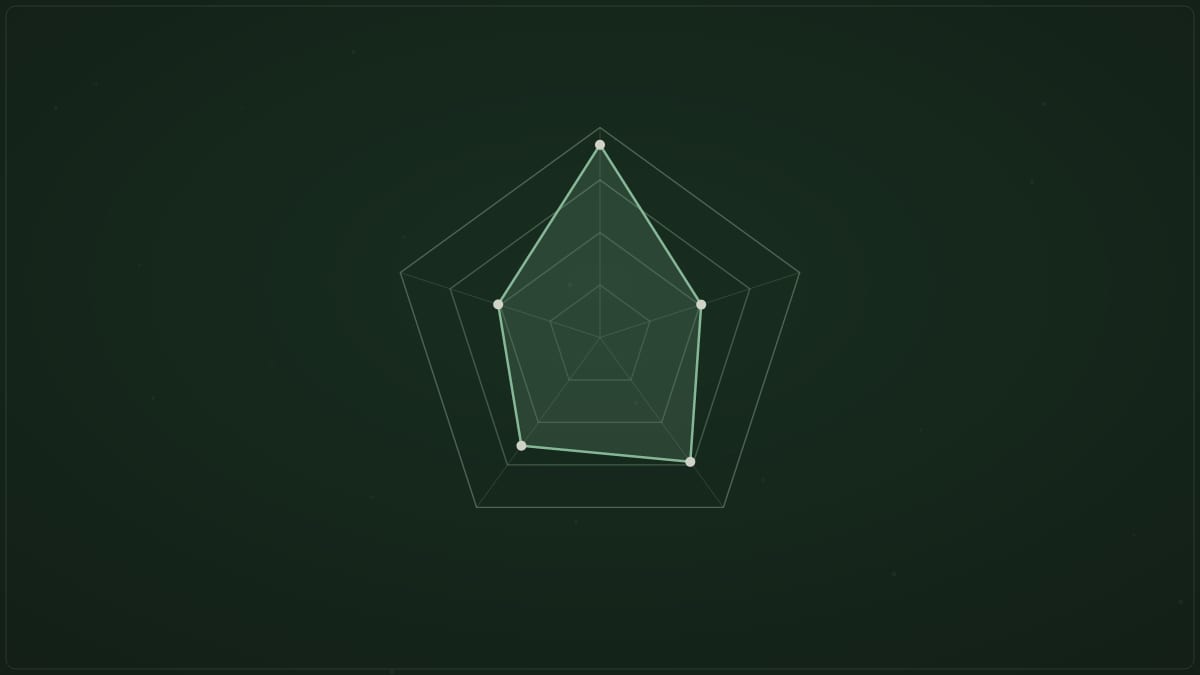
The word "neurotic" carries baggage. In everyday English, it's an insult - shorthand for anxious, irrational, or overemotional. But neuroticism as a Big Five personality trait is none of those things. It's a neutral, dimensional measure of how frequently and intensely you experience negative emotions. This post reframes what neuroticism actually is, why it matters, and what the science says about managing it.
What neuroticism means
Neuroticism is the tendency to experience negative emotions - anxiety, anger, sadness, self-consciousness - more frequently and intensely than others do. It's the "N" in OCEAN (Openness, Conscientiousness, Extraversion, Agreeableness, Neuroticism). At the low end, it's sometimes called emotional stability.
The key insight: neuroticism isn't about whether you feel negative emotion. Everyone does. It's about how often and how strongly. A person high in neuroticism might feel anxious about a work deadline for days, ruminate for hours afterward, and struggle to sleep. A person low in neuroticism might feel briefly concerned, then move on.
The word itself deserves a quick history note. In Freud's era, "neurotic" referred to a pathological condition - a disorder requiring treatment. The Big Five use of "neuroticism" is different: it's a dimensional trait, not a diagnosis. It describes where you fall on a spectrum of emotional reactivity. Understanding that distinction matters, because high neuroticism doesn't mean something is wrong with you.
Neuroticism sits alongside the other core traits that make up the full Big Five. Together, they offer a map of stable patterns in how people think, feel, and behave.
High neuroticism vs low neuroticism
High neuroticism
People high in neuroticism feel emotions intensely. They worry easily, ruminate after stressful events, and take longer to recover emotionally. They're more likely to notice threats, dwell on mistakes, and feel self-doubt.
But high neuroticism isn't all downside. These individuals often show greater attentiveness to risk and detail. They tend to notice problems others miss. Many report deeper emotional experience - both difficult and joyful - and greater capacity for empathy. High-neuroticism people often care more, notice more, and prepare more thoroughly.
The downsides are real: higher vulnerability to anxiety, depression, and burnout, especially under sustained stress. Sleep disruption is common. Physical health complaints appear more often in self-reports.
Low neuroticism (emotional stability)
People low in neuroticism remain calm under pressure. They shake off setbacks quickly, sleep well even during stressful periods, and experience less rumination. They're steady, consistent, and predictable in their emotional responses.
The strengths are evident: genuine resilience, steady judgment, and the ability to function under uncertainty without high distress. Low-neuroticism people are often excellent in crisis roles or high-pressure environments.
But low neuroticism has blind spots too. It can mean under-reactivity to genuine threat - dismissing warning signs or failing to prepare adequately. Some low-neuroticism individuals struggle with empathy because they don't feel others' distress as acutely. And in stable environments, low-neuroticism traits can shade into overconfidence or complacency.
The 6 facets of neuroticism
Neuroticism isn't monolithic. The Big Five neuroticism trait breaks into six facets, identified through the NEO-PI-R model developed by Costa and McCrae.
Anxiety
Anxiety is the tendency toward worry, apprehension, and fear. People high in anxiety facet experience more anticipatory dread about future events, have active threat-detection systems, and often prepare extensively. They worry about health, finances, relationships, and work performance. Low-anxiety people feel less anticipatory concern and are less likely to mentally rehearse worst-case scenarios.
Angry hostility
This facet captures proneness to irritation, frustration, and resentment. High-hostility people react more intensely to obstacles, feel frustration quickly, and may hold grudges longer. They're more likely to lose their temper or feel resentment toward others. Low-hostility people remain patient under frustration and rarely feel genuine anger.
Depression
The depression facet reflects the tendency toward sadness, hopelessness, and low energy. This doesn't mean depressive disorder - it means baseline mood leans more toward the low end, and recovery from sad events takes longer. People high in depression facet struggle with motivation, feel melancholy more often, and may experience low energy even when circumstances are favorable. Low-depression people have more naturally positive mood and energy.
Self-consciousness
Self-consciousness measures sensitivity to others' judgment, embarrassment, and shame. High-self-consciousness people are keenly aware of how they're perceived, feel shame more intensely, and often avoid social situations where they might be judged. They're more likely to interpret neutral social cues as criticism. Low-self-consciousness people feel less social anxiety and care less what others think.
Immoderation (impulsiveness)
This facet reflects difficulty resisting urges and the experience that cravings or impulses feel harder to contain. High-immoderation people struggle more with delayed gratification, may overeat or overspend, and act on urges without fully thinking through consequences. Low-immoderation people have stronger impulse control and can defer immediate satisfaction for longer-term goals.
Vulnerability (to stress)
Vulnerability measures how readily you feel overwhelmed under pressure. People high in vulnerability find it harder to cope when stressed, feel panic more easily, and need more time to recover emotionally from setbacks. They're more likely to catastrophize under pressure. Low-vulnerability people maintain focus and problem-solving ability even during high stress.
It's worth noting: these facets don't always move together. Some high-neuroticism people are highly anxious but calm about anger. Some are deeply self-conscious but emotionally resilient under pressure. The profile is often uneven. For a detailed look at how these play out, see the facet breakdown above.
What neuroticism predicts
Mental health risk
Neuroticism is the strongest Big Five personality predictor of common mental disorders. A landmark meta-analysis by Kotov and colleagues (2010) found that neuroticism shows large associations with major depressive disorder, generalized anxiety disorder, panic disorder, social anxiety, PTSD, and bipolar disorder. The effect sizes are large by psychology standards - correlations in the .4 to .6 range.
This doesn't mean high neuroticism causes mental illness or that high-neuroticism people will develop a disorder. Many do not. But the risk gradient is real and well-documented. The relationship is bidirectional too - high neuroticism increases vulnerability, and mental illness episodes tend to raise neuroticism scores temporarily.
Physical health
High neuroticism correlates with more health complaints, higher cortisol reactivity (the stress hormone), and worse sleep quality. A comprehensive review by Lahey (2009) framed neuroticism as a public health issue precisely because of these patterns. Chronic stress activation takes a toll. That said, the effects are modest in magnitude for any individual - they're visible mainly in large samples.
Life satisfaction
Neuroticism is negatively correlated with subjective well-being. DeNeve and Cooper (1998) found that people low in neuroticism report higher life satisfaction, more positive affect, and greater happiness overall. Again, causality is unclear - people who are happier may naturally become less neurotic over time, or low neuroticism may genuinely protect life satisfaction.
Relationships
Partners high in neuroticism report more conflict and lower satisfaction in relationships. Divorce risk is elevated, especially when one or both partners score very high. But neuroticism doesn't doom relationships - emotional awareness and communication skills can help high-neuroticism people maintain strong partnerships.
Work outcomes
Here the picture is mixed. High neuroticism can correlate with higher attention to detail and thoroughness in some roles, especially those requiring careful error-checking or preparation. But it also correlates with higher burnout risk under prolonged stress and lower likelihood of promotion in high-pressure careers. Low-neuroticism people often progress further in hierarchical organizations, but high-neuroticism people sometimes excel in roles where conscientiousness and detail matter more than political navigation.
For more on how personality traits interact with mental health, see Big Five and mental health.
Heritability and life-course
Neuroticism is roughly 41% heritable, based on twin studies. That means about 40% of the variation between people in neuroticism is explained by genetic differences. The remaining 60% comes from environment, life experience, and choice.
Mean-level neuroticism - the average across a population - tends to drift downward from the 20s onward in most adults. The typical person becomes slightly less neurotic with age. But rank-order stability - whether your neuroticism relative to your peers stays consistent - is higher. If you're high-N in young adulthood, you'll likely remain relatively high-N in midlife, even as your absolute neuroticism scores decline slightly.
This has an important implication: change is possible, but it usually happens gradually. Acute interventions can move the needle. So can decades of accumulated experience, therapy, or life patterns. But you're unlikely to swing from very high to very low neuroticism in a month.
Can you reduce neuroticism?
Yes. More than the older literature suggested.
Cognitive-behavioral therapy (CBT) produces measurable reductions in neuroticism scores across controlled trials. A meta-analysis by Roberts and colleagues (2017) found consistent evidence that personality can change via structured intervention, and neuroticism is one of the most responsive traits. The effect sizes are moderate - you won't flip from high to low, but meaningful improvements are achievable.
Mindfulness-based interventions (MBSR, MBCT) show similar effects, particularly on the anxiety and rumination facets. Regular practice appears to lower reactivity over time.
SSRIs (selective serotonin reuptake inhibitors) have been shown to reduce neuroticism scores beyond their effect on specific symptoms of depression or anxiety. This finding, reported by Tang and colleagues (2009), suggests that medication can shift baseline emotional reactivity, not just acute episodes. This is research worth knowing about; it's not a prescription, but it shows the trait is genuinely modifiable.
Life patterns matter too: regular sleep, exercise, and close relationships all correlate with slightly lower neuroticism over time. These effects are small at the individual level but consistent across studies.
The practical path forward often combines approaches. Finding your baseline first gives you a target to measure against.
Find your baseline first. Take the free test at TheBig5. Then explore evidence-based strategies tailored to your profile.
Common misreads
High neuroticism ≠ mental illness. It's a risk factor, not a diagnosis. Plenty of high-neuroticism people never develop a disorder and live fulfilling, healthy, productive lives. The trait describes a tendency, not a destiny.
Low neuroticism ≠ emotionally healthy. Some low-neuroticism people are genuinely resilient and stable. Others are disengaged, apathetic, or emotionally flat. Apathy registers as calm on a questionnaire, but it's not the same as stability.
Neuroticism is not the same as "being sensitive" in the colloquial sense. Sensory processing sensitivity (HSP - highly sensitive person) overlaps with neuroticism but also overlaps with openness to experience. They're related but distinct constructs.
Neuroticism is not a moral failing. The cultural discomfort with the word "neurotic" - treating it as weakness or irrationality - is a social problem, not a psychological one. The trait itself is morally neutral.
Key takeaways
- Neuroticism measures emotional reactivity and how frequently you experience negative affect.
- It breaks into six facets: anxiety, anger, depression, self-consciousness, immoderation, and vulnerability.
- It's the strongest Big Five predictor of depression, anxiety, and other common mental disorders.
- Approximately 41% heritable; the rest is environmental and learned.
- It's reducible through CBT, mindfulness-based interventions, and (in clinical contexts) medication.
- Low neuroticism has its own blind spots: under-reactivity to threat, reduced empathy, and overconfidence.
FAQ
What is neuroticism in psychology?
Neuroticism is a Big Five personality dimension that measures the tendency to experience negative emotions - anxiety, anger, sadness, self-consciousness - more frequently and intensely. It's a continuous trait, not a disorder. Everyone falls somewhere on the neuroticism spectrum, and where you fall is relatively stable over time.
Is neuroticism a mental illness?
No. Neuroticism is a normal personality trait, not a diagnosis. While high neuroticism is a risk factor for depression, anxiety, and other mental health conditions, most high-neuroticism people never develop a disorder. Think of it as describing your emotional baseline, not pathology.
What does it mean to be high in neuroticism?
High neuroticism means you experience negative emotions more intensely and recover from them more slowly than average. You might worry more easily, feel stress more acutely, and ruminate longer after setbacks. You likely notice threats and problems others miss, and you may be more empathetic. But you also face higher risk of anxiety and depression under sustained stress.
Is high neuroticism always bad?
No. High neuroticism has real downsides - higher anxiety and depression risk, sleep disruption, relationship friction under stress. But it also correlates with conscientiousness, attention to detail, creativity, and empathy. High-neuroticism people often excel in roles requiring careful preparation, ethical sensitivity, or emotional attunement.
Can neuroticism be reduced?
Yes. CBT, mindfulness-based interventions, and SSRIs all produce measurable reductions in neuroticism scores. Life patterns - regular exercise, good sleep, close relationships - correlate with lower neuroticism over time. Change is usually gradual, but consistent effort works.
Is neuroticism genetic?
About 41% of neuroticism variation is heritable - explained by genetic differences. The other 59% comes from environment, experience, and choice. That means neuroticism is genuinely changeable, even if you have a genetic predisposition toward higher levels.
What's the difference between neuroticism and anxiety?
Neuroticism is the trait - your baseline tendency toward negative emotions. Anxiety is one of six facets within neuroticism, specifically the tendency toward worry and apprehension. You can be high in neuroticism without being especially anxious (for instance, high in anger or self-consciousness instead). And you can have clinical anxiety disorder without being high in neuroticism overall.
Does neuroticism increase with age?
The opposite. Mean-level neuroticism tends to drift downward with age for most people - you typically become slightly less neurotic as you move from your 20s into midlife and beyond. But if you're high in neuroticism in young adulthood, you'll likely remain relatively high-neuroticism compared to your peers, even as your absolute scores decline slightly.
What jobs suit high-neuroticism people?
High-neuroticism people often excel in roles requiring thorough preparation, attention to detail, and emotional awareness - quality assurance, research, healthcare, therapy, writing, and teaching. They may struggle in high-pressure sales or politics. The key is matching your emotional style to the role's demands, not fighting your temperament.
Is it possible to score too low on neuroticism?
Yes. Very low neuroticism can mean under-reactivity to real threats, reduced empathy for others' distress, and overconfidence in your ability to handle risk. Some low-neuroticism people are genuinely resilient; others are emotionally flat or dismissive. Extremes in either direction carry drawbacks.
How is neuroticism measured?
Neuroticism is measured through self-report questionnaires, typically asking how much you agree with statements about negative emotions and stress reactivity. Our Big Five test uses a 50-item instrument that has been validated against the NEO-PI-R, the academic gold standard. Your score places you along a continuous spectrum from low to high.
Ready to explore your personality profile in depth? Take our free Big Five test and get a personalized sample result showing exactly where you fall across all five traits, including neuroticism.