Openness to Experience: The Big Five Trait Guide
Openness to experience is the Big Five trait linked to creativity, curiosity, and intellectual depth. Here's what it measures and what high/low really mean.
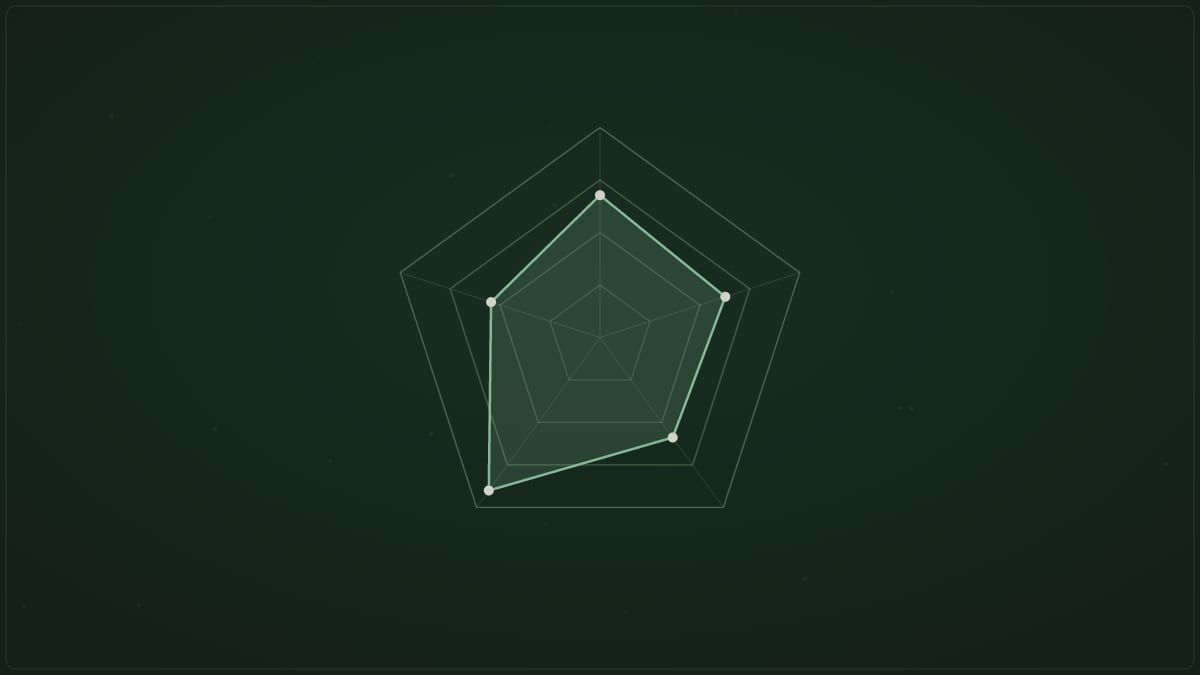
Openness to experience measures how curious, imaginative, and willing you are to engage with novelty and unconventional ideas. This guide explores what openness actually means, how it shows up across six dimensions, what neuroscience reveals about it, and what it predicts about creativity, career fit, and life outcomes.
What openness to experience means
Openness to experience is the "O" in the full Big Five. It captures your tendency toward curiosity, imagination, and preference for the novel over the routine. People high in openness are drawn to new experiences, complex ideas, and abstract thinking. They tolerate ambiguity well and enjoy breaking familiar patterns.
It's important to clarify what openness is not: it's not intelligence itself, though the two correlate modestly. Openness describes a cognitive style - a preference for how you engage with information and the world - rather than your raw ability to process it. Someone high in openness might spend hours exploring an unfamiliar subject; someone low in openness might prefer applying familiar methods to solve concrete problems, and do so with exceptional focus and precision.
Openness on a spectrum
What high openness looks like
High-openness people tend to be curious, imaginative, and drawn to art, ideas, and novelty. They enjoy abstract thinking, tolerate ambiguity easily, and find it simple to break routine and try new things. Their interests often cluster around reading, travel, art, exploring abstract subjects, and seeking unconventional experiences.
They're more likely to rearrange their lives for a new opportunity, learn a language for the sake of learning, or dive into a debate about moral philosophy with someone they've just met. Uncertainty doesn't paralyze them - it intrigues them.
What low openness looks like
Low-openness people tend to be practical, grounded, and concrete in their thinking. They prefer the familiar, value tradition and established ways of doing things, and appreciate efficiency and clear outcomes. They often excel in environments that reward consistency, execution, and expertise in a stable domain.
This is not "closed-mindedness" in the colloquial sense. Low openness is a different cognitive style with real strengths. People lower in openness are often the backbone of organizations that depend on reliable systems, skilled trades, and steady execution. They're less likely to chase every novel idea but more likely to deeply master a chosen path. That's functional and valuable.
The 6 facets of openness
Openness breaks down into six dimensions, each measured below.
Imagination
Imagination reflects the richness of your inner life and tendency toward fantasy. High scorers have vivid, complex daydreams and narrative-based thinking. They enjoy "what if" scenarios and often approach problems by imagining possibilities first. Low scorers are less drawn to fantasy and prefer practical, grounded thinking.
Aesthetics
Aesthetics is your sensitivity to and engagement with art, music, poetry, and natural beauty. High scorers deeply feel beauty - a piece of music might move them emotionally, or a painting might absorb their attention. Low scorers may appreciate beauty intellectually but experience less emotional pull toward it.
Feelings
Feelings measures awareness of and comfort with your own inner emotional states. High scorers are attuned to subtle emotional shifts in themselves and others. They explore their emotional landscape and often value emotional authenticity. Low scorers tend to be less introspective about emotion and may view feelings as secondary to logic or practical outcomes.
Actions
Actions reflects your willingness to try new activities and seek variety in how you spend your time. High scorers want to travel to unfamiliar places, try new cuisines, adopt new hobbies, and vary their routines. Low scorers prefer predictability and mastery of familiar activities rather than constant novelty.
Ideas
Ideas captures intellectual curiosity and engagement with abstract concepts. High scorers enjoy philosophy, abstract theory, and intellectual debate for its own sake. They like exploring big questions without needing immediate practical applications. Low scorers are more pragmatic - they want to know how an idea works or applies before investing time in it.
Values
Values reflects willingness to re-examine social, political, religious, and ethical beliefs. High scorers are more likely to question inherited beliefs and adopt new ones as their thinking evolves. Low scorers tend to preserve established values and traditions, finding stability in continuity.
The neuroscience
Recent neuroscience helps explain what's happening in the brains of high-openness people. Research shows that high openness correlates with stronger connectivity in the default mode network (DMN) - the brain system active when you're thinking about abstract ideas, daydreaming, or considering possibilities. This anatomical difference aligns perfectly with the trait: if your DMN is more active and well-connected, imaginative and abstract thought comes more naturally.
Working memory capacity - your ability to hold and manipulate multiple pieces of information simultaneously - is higher in high-openness individuals. This supports their comfort with complexity and ambiguity: they can juggle more conceptual balls at once.
The neurotransmitter dopamine plays a supporting role. Higher dopamine activity in the prefrontal cortex is associated with stronger working memory and elevated openness. This creates a biological pathway: more dopamine enables better working memory, which enables the kind of fluid, exploratory thinking that characterizes high openness.
Another finding: people high in openness show lower latent inhibition - the brain's automatic habit of filtering out familiar stimuli as "background noise." Translation: high-openness people notice things the rest of us tune out. A repeated sound, a subtle color shift, a minor inconsistency in someone's story - these register more readily. That can be an advantage in creative work but also a source of distraction in routine settings.
What openness predicts
Creativity
The strongest Big Five correlate of creative achievement is openness. Meta-analyses across art, music, writing, science, and design consistently show that openness is the trait most linked to creative output. This makes intuitive sense: creativity requires tolerance for ambiguity, willingness to entertain unconventional ideas, and comfort exploring new directions. The connection is robust enough that openness is a useful filter when identifying people likely to succeed in creative fields.
Cognitive ability
Openness correlates modestly with IQ, particularly crystallized intelligence - the knowledge and skills you accumulate over time (r ≈ .30). This correlation is meaningful but not strong. Openness and intelligence are related but distinct. High openness helps you explore novel ideas and abstract domains, which over time can boost your knowledge base. But someone can be highly intelligent with low openness, applying that intelligence to deep mastery of a narrow, familiar domain.
Political orientation
One of the most robust Big Five - politics correlations is between openness and political orientation. High openness correlates with liberal and progressive attitudes. Low openness correlates with conservative and traditional attitudes. This isn't a value judgment - it's a consistent empirical pattern. Across cultures and studies, people high in openness are more likely to question traditional structures and embrace progressive change, while people low in openness are more likely to preserve existing institutions and values.
Career fit
High openness tends to lead toward research, creative roles, entrepreneurship, teaching, therapy, and other work that rewards novelty-seeking and complex problem-solving. Low openness often excels in structured operational roles - police work, skilled trades, military operations, accounting, and service roles that reward precision and consistency.
The logic is straightforward: high-openness people find routine demoralizing and ambiguity energizing, so they gravitate toward complex, novel work. Low-openness people find routine stabilizing and ambiguity stressful, so they excel where rules are clear and mastery is achievable.
See our piece on careers for each Big Five trait for deeper exploration.
Heritability and stability
Openness is roughly 57-61% heritable - meaning about half your openness is shaped by genetics, and half by environment and experience. That puts it in line with other Big Five traits.
In terms of stability: across your adult life, your rank-order (how you compare to others) is quite stable. If you're moderately high in openness at 25, you'll likely still be moderately high at 55. The correlation across decades is about .70 - substantial but not perfect.
What does shift is mean-level openness. Openness peaks in your 20s and gradually drifts downward through your 60s and 70s. The decline is modest - not a cliff - but consistent across studies. This aligns with life-stage patterns: younger people have fewer commitments and social roles, so novelty-seeking and exploration are more practical. As you age, you often accumulate responsibilities and expertise in chosen domains, and openness naturally settles.
Can openness change?
Your rank-order is stable, but not immovable. Exposure to new ideas, education, travel, therapy, and deliberate practice can shift openness scores over time. People who seek out diverse experiences, engage with unfamiliar perspectives, or practice intellectual flexibility often see modest gains in openness.
Emerging research on psilocybin is worth noting. Studies show that people who undergo psilocybin sessions (in controlled research settings) report temporary increases in openness that persist for weeks or months post-session. This is novel and still-emerging evidence - we don't yet know if these shifts become permanent - but it suggests that openness isn't purely fixed.
For a deeper look at strategies to cultivate openness, see how to become more open.
Common misreads
A few clarifications on what openness is and isn't.
"Open-minded" in everyday language doesn't match trait openness. Being open-minded usually means being willing to entertain a new idea. Trait openness is about engaging with ideas, complexity, and novelty as a preference. You can be low in trait openness but quite open-minded - you just require good reasons to shift your beliefs. Conversely, high-openness people are engaged with ideas but not necessarily right about them.
High openness is not the same as high intelligence. The two correlate, but the overlap is modest (r ≈ .30). You can be highly intelligent and low in openness, applying that intelligence to deep mastery of a focused domain.
Low openness is not rigidity or closed-mindedness. It's a preference for the familiar, concrete, and proven. Low-openness people often have strong values and beliefs, yes - but that's not the same as inflexibility. Many are thoughtful, principled, and change their minds when evidence warrants it. They just require more evidence or reason before doing so.
Key Takeaways
- Openness measures curiosity, imagination, and engagement with novelty and unconventional ideas.
- Six facets make up openness: imagination, aesthetics, feelings, actions, ideas, and values.
- High openness correlates strongly with creativity, modestly with crystallized intelligence, and robustly with liberal-leaning attitudes.
- About 60% of openness is heritable. Your rank-order is stable across adulthood, though mean-level openness drifts down slightly with age.
- Low openness is a different cognitive style, not a lesser one. It brings strengths in focus, execution, and stability.
- Emerging evidence (psilocybin research) suggests state-level openness can shift, though permanence is still uncertain.
FAQ
H3: What does openness to experience mean in psychology?
Openness to experience is one of the Big Five personality traits. It measures how curious, imaginative, and willing you are to engage with novelty, abstract ideas, and unconventional experiences. It's not intelligence - it's a preference for how you engage with the world.
H3: Is high openness a good thing?
Neither high nor low openness is inherently "good." High openness supports creativity, intellectual exploration, and comfort with change. Low openness supports focus, mastery, reliability, and stability in familiar domains. Different contexts reward different traits.
H3: Is openness the same as being open-minded?
Not quite. "Open-minded" usually means willing to consider new ideas. Trait openness is about seeking complexity and novelty as a preference. You can be low in trait openness but quite open-minded - you just prefer solid reasons before shifting your beliefs.
H3: Is openness linked to intelligence?
Openness correlates modestly with crystallized intelligence (accumulated knowledge), about r ≈ .30. The traits overlap but are distinct. High openness helps you explore novel domains over time, but intelligence and openness are independent dimensions.
H3: Can you change your openness score?
Your relative rank-order is stable, but not locked. Education, travel, therapy, and exposure to diverse ideas can shift openness over time. Emerging research on psilocybin shows temporary openness increases, though permanence is still being studied.
H3: Is openness genetic?
About 57-61% of openness is heritable, meaning roughly half is shaped by genes and half by environment. It's one of the more heritable Big Five traits, but environment and experience still play a substantial role.
H3: How do I know if I'm high or low in openness?
Take our free personality test. You'll see your openness score and how you compare on all six facets. You can also ask yourself: Do you seek novelty and variety, or prefer familiar routines? Are you drawn to abstract ideas or practical outcomes? Do you explore new perspectives easily or prefer established beliefs?
H3: What careers suit high openness?
High openness supports success in research, creative fields, entrepreneurship, teaching, therapy, strategic roles, and any work that rewards novelty-seeking and complex problem-solving. Low openness often excels in skilled trades, operational management, law enforcement, military, and roles that reward precision and consistency.
H3: What's the difference between openness and intellect?
Openness is a trait describing preference for novelty and complexity. Intellect (sometimes called "Intellect/Imagination" in newer models) is a facet of openness measuring engagement with ideas. Intellect sits within openness, not outside it.
See where you land on openness
Our free personality test shows your openness score, breaks down all six facets, and compares you to thousands of other users. Explore more at TheBig5.