Big Five and Entrepreneurship: The Founder Profile
Entrepreneurs score distinctly on the Big Five - high on openness and conscientiousness, lower on agreeableness. Here's what the research shows.
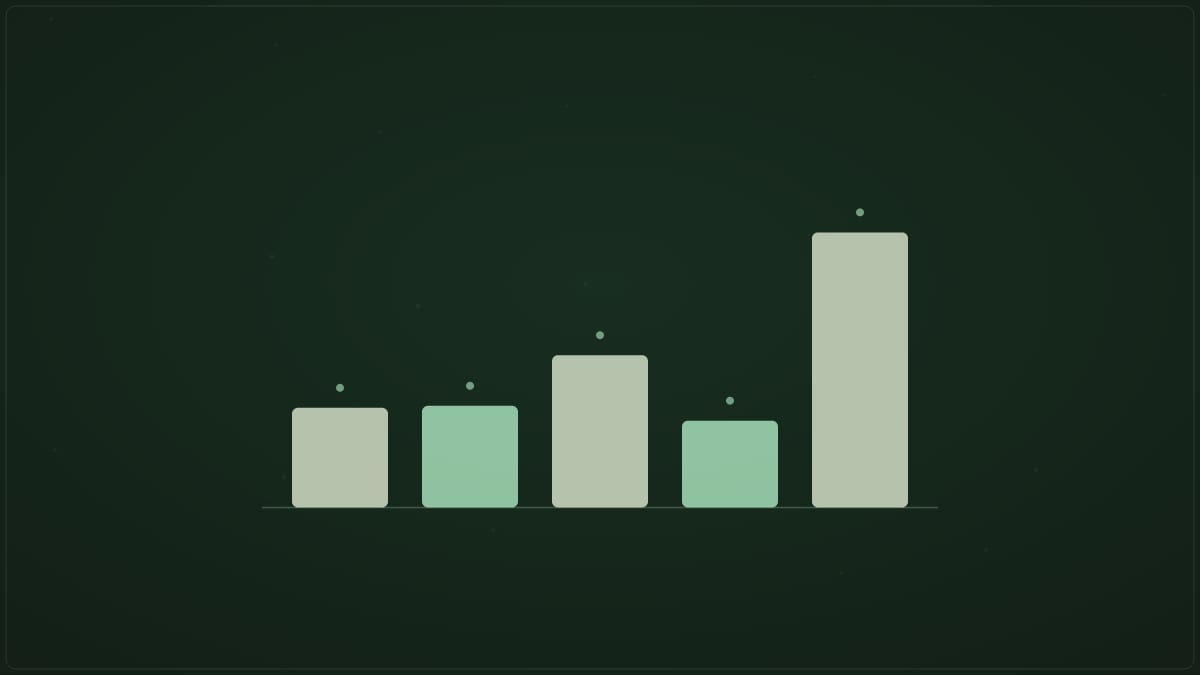
Visual 1: Entrepreneur trait profile chart (average scores vs general population). Alt: "Founder profile." Visual 2: Stage-by-trait matrix (intention, launch, survival, growth). Alt: "Stage-trait map." Visual 3: Solopreneur vs founder vs SMB owner profile comparison. Alt: "Profile types." Visual 4: Founder-to-CEO trait transition diagram. Alt: "Profile transition."
Entrepreneurs aren't all the same. But research shows they cluster into a specific Big Five personality profile. High on openness to experience and conscientiousness. Lower on agreeableness. Lower on neuroticism. Higher on extraversion. This profile predicts both who decides to start a business and who survives the first five years - but not always in the same direction. Traits that launch a venture don't always scale it. And plenty of successful founders break the pattern entirely.
The entrepreneurial profile
Research across multiple studies finds the same core pattern. Entrepreneurs score higher on openness than the general population. Higher on conscientiousness. Higher on extraversion. Lower-to-moderate on agreeableness. Lower on neuroticism.
The clearest evidence comes from Zhao, Seibert, and Lumpkin's 2010 meta-analysis. It pulled together 23 studies and found this profile predicts both entrepreneurial intention (the desire to start) and entrepreneurial performance (whether the business survives and grows). Effect sizes are modest but consistent.
The pattern makes intuitive sense. Openness supports opportunity recognition - spotting gaps, imagining new possibilities. Conscientiousness drives execution - the grinding, unglamorous work. Extraversion helps with fundraising, sales, hiring. Lower agreeableness enables hard decisions. Lower neuroticism helps founders tolerate the uncertainty and volatility every startup faces.
But here's the caveat: not every successful founder fits this profile. Some of the most accomplished founders are low on extraversion. Others score high on agreeableness. A few are genuinely neurotic and channel that vigilance into competitive advantage. The profile is descriptive, not prescriptive. It describes what's common among entrepreneurs - not what's required.
Trait-by-trait for entrepreneurship
Each trait tells a different story about the entrepreneurial journey.
Openness
Openness to experience is about generating ideas, imagining alternatives, and welcoming change. For entrepreneurs, it predicts opportunity recognition. High-openness founders spot gaps in the market. They're willing to pivot when evidence shifts. They explore adjacent markets.
The downside: without discipline (conscientiousness), high-openness founders chase too many ideas without finishing any. They drift from one thing to the next. That's why the combination matters. Openness without conscientiousness is daydreaming. Conscientiousness without openness is efficient execution of stale ideas.
Read more about openness to experience.
Conscientiousness
Conscientiousness is about discipline, follow-through, and attention to detail. For founders, it's arguably the most critical trait. Businesses are built through sustained effort. Meeting payroll. Responding to customers. Fixing bugs. Grinding through unglamorous work month after month.
The industriousness facet of conscientiousness matters more than orderliness. You need the drive to ship, not the need for everything perfectly organized. Low-conscientiousness entrepreneurs tend to be idea-heavy and execution-light. They have vision but struggle to operationalize it.
This trait becomes even more important at later stages. While openness predicts who wants to start, conscientiousness predicts who actually does - and who survives past year three.
Read more about conscientiousness.
Extraversion
Extraversion helps with fundraising, sales, public representation. High-extraversion founders enjoy pitching. They network easily. They build teams. They're comfortable being the face of the company.
Many successful introverted founders exist. They don't enjoy pitching or networking, so they delegate. They build written communication first - clear emails, documentation, thoughtful blogs. They hire extraverts to handle external-facing work. The trait helps, but it's not a requirement. What matters is solving the problem of external representation, one way or another.
Read more about extraversion.
Agreeableness
Low agreeableness predicts willingness to negotiate hard, fire underperformers, and prioritize business interests over team harmony. Very high agreeableness can create founder problems: avoiding hard decisions, underselling yourself, over-accommodating every request.
This isn't about being ruthless or cold. It's about being willing to hold an unpopular line when the business requires it. Firing someone who isn't performing. Saying no to a client. Negotiating harder on a contract. Cutting a feature that's not core.
Some of the best founders are high on agreeableness. They partner with low-agreeableness co-founders who handle the hard calls. The outcome matters, not the mechanism.
Read more about agreeableness.
Neuroticism
Low neuroticism supports tolerance of uncertainty. That's crucial for startups. You don't know if your product will sell. You don't know if you'll make payroll next quarter. You don't know if a competitor will render your business obsolete. Low-neuroticism founders handle that better. They don't spiral into catastrophic thinking.
High-neuroticism founders do exist and sometimes outperform. Their risk-sensitivity catches threats early. But without strong coping systems - exercise, therapy, co-founders, mentorship - they tend to burn out faster. The instability of startup life compounds their natural tendency toward worry.
Read more about neuroticism.
Stage matters - intention, launch, survival, growth
The same traits don't predict success across the entire entrepreneurial journey. What drives you to want to start is different from what keeps you going.
Intention (wanting to start)
Openness and extraversion most strongly predict the intention to start a business. You imagine new possibilities and you're comfortable pitching them to others. A 2022 study of Saudi university students and recent graduates found the same pattern: exploration-prone profiles expressed stronger entrepreneurial intentions.
This is the easiest prediction problem. Many people express entrepreneurial intent. Fewer actually start. Even fewer build sustainable businesses.
Launch (actually starting)
Conscientiousness takes over when intentions become action. You need discipline to actually build something. To learn the business. To make the first sale. To hire your first person.
Low neuroticism helps here too. The initial leap is terrifying. You're leaving stable income. You're betting on an unproven idea. You're taking on financial and personal risk. Lower-neuroticism founders make that jump more easily.
Survival (making it past year 3-5)
Conscientiousness remains the strongest predictor of survival. You have to execute consistently, month after month. Respond to customer problems. Manage cash. Adjust when early assumptions prove wrong.
Low agreeableness matters here. Founders who can't fire underperformers tend to run shorter businesses. Founders who can't negotiate tend to get taken advantage of. Founders who avoid hard decisions accumulate problems.
Support structures moderate all of this. A co-founder with complementary traits. A mentor. A spouse who provides stability. These matter as much as the founder's raw personality.
Growth (scaling past the founder stage)
A combination of openness, extraversion, and conscientiousness predicts who scales. You need openness to expand into new markets. Extraversion to build teams and manage relationships at scale. Conscientiousness to systematize and execute.
But here's the trap: traits that help in the solo-founder stage sometimes struggle at scale. Solo founding rewards high autonomy and intense self-direction. You make every decision yourself. You work the longest hours. Running at scale requires delegation and trust. It requires building teams where other people drive the work.
Founder-to-CEO transitions fail frequently because the personality profile for building differs from the profile for running. The person who scraped together the first product is rarely the best person to manage a 50-person company.
Solopreneurs vs founders vs small business owners
Not all entrepreneurs look the same because they're not building the same thing.
Solopreneurs and freelancers
Solopreneurs - freelance writers, consultants, agencies of one - have higher introversion tolerance. Many prefer solo work. They don't want to manage people. They don't want investors. They want autonomy and control.
High conscientiousness is still critical. You have to deliver. You have to manage your own time and workflow. But agreeableness matters less. You're not making hard decisions about other people's careers. You're making decisions about your own work.
The trait profile is narrower: conscientiousness and a comfort with autonomy. Openness helps you find new clients. Low neuroticism helps you tolerate income variability. But the pattern is less pronounced than in traditional startups.
Small business owners
Small business owners are closer to the classic entrepreneurial profile but with less openness. Many SMBs execute known business models: restaurants, plumbing services, dry cleaners, accounting firms. They're not inventing new categories. They're executing familiar ones efficiently.
They still need high conscientiousness and emotional stability. They need willingness to make unpopular decisions. But they need less openness because they're exploring less. The business model is proven. The challenge is execution.
Venture-backed startup founders
Venture-backed founders represent the most extreme profile. High openness - to new markets, novel technology, unproven business models. High conscientiousness - to execute in a compressed timeline with VC pressure. High extraversion - to fundraise and build teams. Low agreeableness - to make hard calls. Low neuroticism - to handle volatility and uncertainty.
This group is also the most filtered sample. Only a tiny percentage of all entrepreneurs are venture-backed. And only a tiny percentage of those raise Series A. These aren't representative of all founders. They're the extreme outlier.
What traits don't tell you
Personality predicts some of the variance in entrepreneurial success. But it's not the whole story. Often it's not even most of the story.
Skills matter. Founding requires selling, building, managing, hiring. These are learned. Traits create predispositions. But execution determines outcomes.
Cognitive ability matters more than any Big Five trait. Schmidt and Hunter's 1998 framework on general mental ability shows that IQ is the most robust predictor of job performance across contexts. Applied to entrepreneurship, cognitive ability predicts entrepreneurial success more consistently than personality. Smart founders solve problems. They learn. They adapt. Personality just creates a starting position.
Domain knowledge wins over personality. Founders who deeply understand their market outperform novices regardless of trait profile. Industry experience teaches customer psychology, competitive dynamics, regulatory constraints. That knowledge is worth more than any personality trait.
Luck and timing dwarf personality. Most founder outcomes are dominated by market conditions, product-market fit timing, capital availability, and factors entirely outside their control. The best entrepreneur in the world launched into the wrong market at the wrong time will likely fail. A mediocre entrepreneur with strong market tailwinds will likely succeed.
Capital access, networks, and family wealth are sociological factors that outweigh trait factors in outcomes. Founders from wealthy families can take more risk. They have stronger networks. They can bootstrap longer. These advantages compound across generations.
Can you become more entrepreneurial?
Traits are stable but not immutable. You can shift them through sustained effort. But you shift slowly.
What's more tractable: behaviors. You can practice sales even if you're introverted. You can ship a small project even if you tend toward perfectionism. You can develop tolerance for rejection. You can get comfortable with ambiguity.
The entrepreneurial profile tends to emerge through action, not self-rebranding. You don't become conscientious by deciding to be. You become conscientious by shipping projects that require sustained effort. You don't become more open by taking a personality test. You become more open by exploring markets, talking to customers, iterating on ideas.
If you're curious about your own Big Five profile and how it might shape your entrepreneurial path, you can take the test to see where you land on the full Big Five.
Common misreads
The entrepreneurship-personality research gets misinterpreted frequently.
"I'm not an entrepreneur because my agreeableness is high." Many successful founders are high on agreeableness. They partner with low-agreeableness co-founders who handle the hard calls. Personality is a team sport, not a solitary trait.
"Extraverts make better founders." Extraverts have an edge in fundraising and hiring. But in sustained strategic work, introversion is neutral. Plenty of introverted founders build exceptional companies.
"I'm too neurotic to start a business." High-neuroticism founders exist and sometimes outperform low-neuroticism founders in specific contexts. They need better coping infrastructure - therapy, exercise, co-founders with complementary profiles. But the trait isn't disqualifying.
"Personality is destiny." It isn't. Personality is one input. Capital, timing, skills, markets, and decisions matter more. Personality creates a starting position. It doesn't determine the ending.
Key takeaways
- Entrepreneurs cluster in a distinct Big Five profile: higher on openness and conscientiousness, lower on agreeableness and neuroticism, typically higher on extraversion. This profile is descriptive, not prescriptive.
- Openness predicts opportunity recognition and willingness to pivot. Conscientiousness predicts execution and survival.
- Low agreeableness helps with hard decisions but isn't required. Founders find workarounds through partnerships, delegation, or hiring.
- Trait relevance shifts by stage. Openness and extraversion predict intention. Conscientiousness predicts launch and survival. A combination predicts scaling.
- Cognitive ability, skills, capital, timing, and domain knowledge matter at least as much as personality traits for entrepreneurial success.
- Founder-to-CEO transitions fail because the profile for building something differs from the profile for running something at scale.
FAQ
What are the Big Five traits of entrepreneurs?
Entrepreneurs on average score higher on openness to experience, conscientiousness, and extraversion. They score lower on agreeableness and neuroticism. But the research describes central tendencies, not universal rules.
Which Big Five trait matters most for entrepreneurship?
Conscientiousness is the most robust predictor. It determines who launches and who survives. But the answer depends on the stage: openness matters most for opportunity recognition, conscientiousness for execution, extraversion for scaling, and low agreeableness for hard decisions.
Can introverts be successful entrepreneurs?
Yes. Introversion doesn't predict entrepreneurial success. Many successful founders are introverted. They handle external representation through delegation, writing, or hiring. What matters is solving the representation problem, not the trait itself.
Do entrepreneurs have lower agreeableness?
On average, yes. But many successful entrepreneurs are high on agreeableness. They partner with low-agreeableness co-founders or hire people comfortable with hard decisions. The outcome matters. The mechanism is flexible.
Does high neuroticism prevent entrepreneurship?
No. High-neuroticism founders exist and sometimes excel. Their risk sensitivity catches problems early. Without strong coping systems they burn out faster. But the trait isn't disqualifying.
What's the personality of a typical startup founder?
High on openness and conscientiousness. Moderate-to-high on extraversion. Lower on agreeableness and neuroticism. But "typical" masks wide variation. Many successful founders deviate significantly.
Can you become more entrepreneurial?
Traits shift slowly through sustained effort. Behaviors shift faster. You can practice sales, ship projects, tolerate rejection, and embrace ambiguity regardless of your starting trait profile.
Are entrepreneurs born or made?
Both. Traits create predispositions. But founding is a learned skill. You become an entrepreneur through action - executing projects, solving customer problems, iterating on ideas.
Do small business owners have the same profile as tech founders?
No. Tech founders show the most extreme profile: very high openness, very high conscientiousness, high extraversion, low agreeableness, low neuroticism. Small business owners tend toward less openness because they execute known models. Solopreneurs need less extraversion.
Is conscientiousness more important than openness for founders?
Depends on the stage. Openness matters for opportunity recognition and pivoting. Conscientiousness matters for execution and survival. Both are required for building at scale.
Curious about your own profile? Take the test to see where you land on the Big Five and explore what it might mean for your work. Start at TheBig5.